Pickleball Academy Era Pickleball: Strength and Agility
The first time you walk into Era Pickleball, the air smells of concrete, fresh wax, and the quiet charge of athletes thinking through motion. This is not simply a court with lines and a net. It is a living classroom where strength and agility are not abstract concepts but daily practice. The era of pick up and play alone is fading. In its place comes a meticulous approach that treats pickleball as a sport with its own demands on hips, shoulders, ankles, and the nervous system. At Era Pickleball, the emphasis on strength and agility is not a sidebar. It sits at the core of every training session, every court session at the pickleball center, and every plan for court rental that is designed to maximize performance and minimize risk.
The story begins with people who came for a simple way to stay active and found a method to play faster, smarter, and longer. They discovered that endurance in pickleball is not just about stamina, but about preserving sharp reaction time during the last two games of a long session. They learned that agility is more than quick footwork; it is the ability to switch directions with minimal energy cost, to blend the soft touch of dinking with the explosive pop of a drive, and to do both without compromising balance. This is the kind of transformation that Era Pickleball aims to deliver through a deliberate program that blends science with field-tested practice.
What makes Era Pickleball distinctive is the way it marries facility and curriculum. The pickleball center is more than a venue for games. It is a hub where players can train with purpose and then apply what they train to the court. The transition from workout to match becomes almost seamless because the drills are not random. They are designed to build the same qualities that show up in a tournament or a high-stakes club match. When a player finishes a session on one of Era Pickleball’s courts, the steps taken toward stronger hips and more responsive feet feel natural, almost obvious, even if they required a week of disciplined work to reach that clarity.
From a practical standpoint, the program is structured around three intertwined pillars: controlled strength, movement efficiency, and tactical adaptability. Strength is not merely about lifting heavy things or maxing out a one rep. It is about building resilient connective tissue, improved rate of force development, and joint stability that preserves technique under fatigue. Movement efficiency aims to reduce wasted energy in transitions, recoveries, and the micro-adjustments that happen at the net. Tactical adaptability concerns reading the court faster, anticipating your opponent’s patterns, and making smarter shot choices when the rally stretches beyond the basics.
Strength and agility in pickleball show up in the simplest moments as well as the most dramatic ones. A serve that lands with precision, a backhand slice that stays low, a quick step to cut off a reset ball and stay on the offensive—all of these require a blend of strength, balance, and proprioceptive awareness. Era Pickleball has built its coaching around not just what the body can do but how the brain coordinates the body under time pressure. The difference is noticeable when you watch players who train here versus those who rely on instinct alone. The trained players anticipate more efficiently, recover faster between points, and maintain aggressive posture when the court shrinks during a tense moment.
A good program understands the realities of the sport and the realities of athletes in mid career. Many players arrive with a blend of athletic background and unique weaknesses. A former tennis player may carry shoulder and chest tightness that makes hard drives stiff and uncomfortable. A newer player might struggle with ankle stability after a misstep on a slippery court. The Era Pickleball approach recognizes these individual narratives and builds a plan that respects them while driving the shared goal: better movement, stronger bodies, longer rallies, smarter shot selection.
The environment you find at Era Pickleball reflects a philosophy as much as a schedule. The center is clean, well lit, and thoughtfully organized. It is not a place that caters to quick escapes or cursory workouts. Training here feels like a craft practiced by people who have spent years refining their approach to the mechanics of movement. The coaches bring real-world experience, illustrating concepts with on-court demonstrations that are immediately relevant. They speak in plain terms about what a given drill will test, how to measure progress, and what to do if you feel a nagging ache during a set. The language is practical, not abstract. You hear about loading through the legs, maintaining a neutral spine, engaging the core, and then applying those principles in a rally that matters.
The center’s schedule reflects a balance between structured programming and flexibility. There are dedicated times for strength circuits, dedicated mobility sessions, and on-court drill blocks that emphasize speed and reaction. There is also space for casual practice on court rental days when players want to experiment with the techniques they have learned in a more relaxed setting. It is this blend of discipline and adaptability that makes the Era Pickleball model work for both serious competitors and players who simply want to stay mobile and confident on the court.
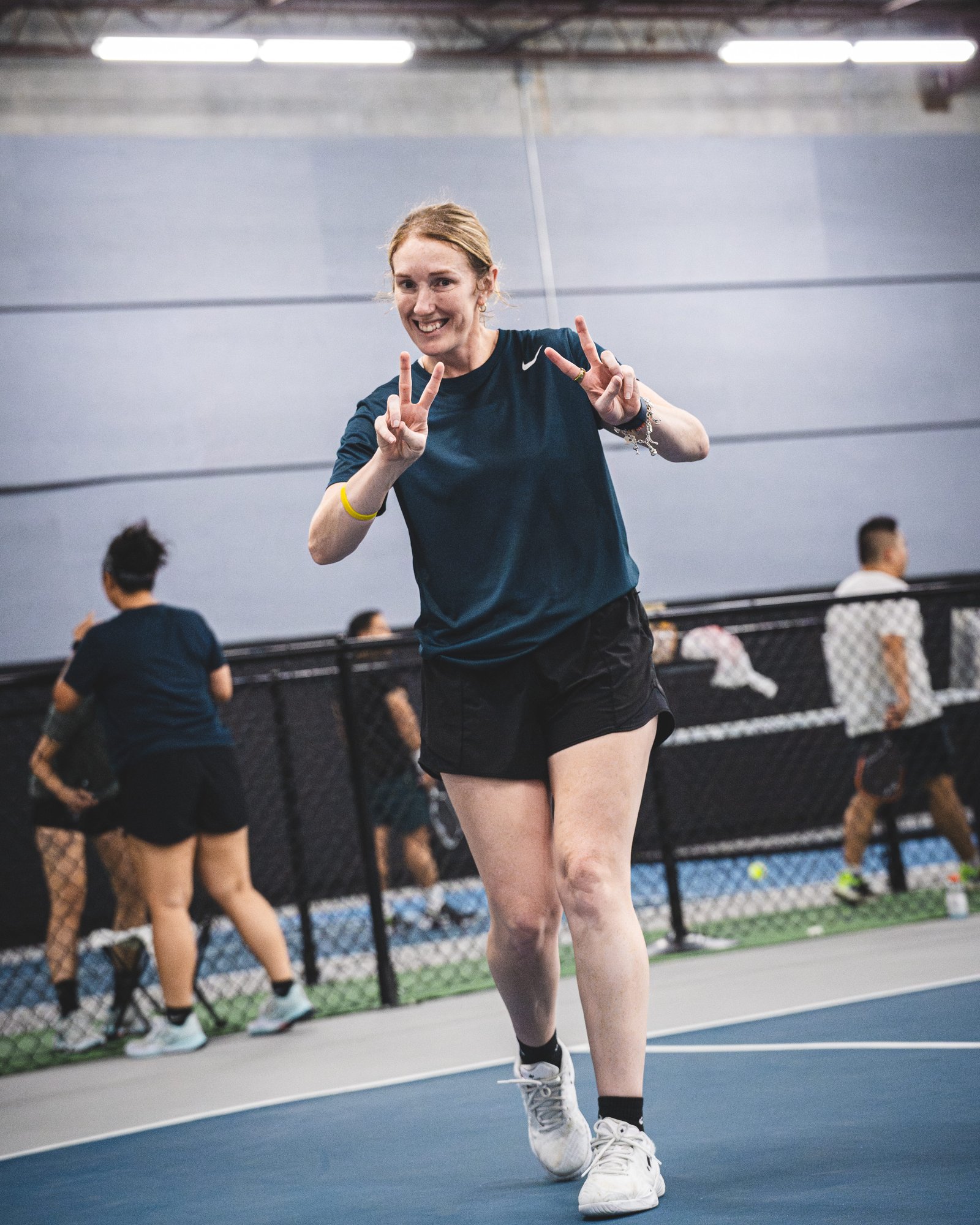
In practice, the strength component is not a separate routine that lives in a gym far away. It is a sequence of intentional actions woven into a typical practice. A session might begin with a 10-minute dynamic warm-up to prime the joints and nervous system, then move into a series of unilateral and trunk-stabilizing movements that address common weak links. The focus is not on piling on heavy weights, but on increasing the quality of muscle recruitment in movements that matter most during a game. For many, the payoff is felt quickly in the clarity of footwork, the ease of changing direction, and the ability to keep the paddle in a strong, balanced position when chasing a ball to the baseline or sprinting to the kitchen line.
The agility portion follows a similar philosophy. Agility, in this setting, is not merely the ability to sprint fast. It is the art of micro-adjustments, the capacity to step sideways with control, to decelerate quickly without losing balance, and to reaccelerate with the same smoothness that characterizes a well-placed drop shot. The drills are simple in appearance but demanding in outcome: ladder drills that emphasize precise foot placement, reaction drills that require quick decision making, and multi-directional drills that mimic the patterns players see in real matches. The aim is to cultivate a body that can absorb impact without breaking rhythm, and a mind that can stay calm and strategic while the rally intensifies.
Another hallmark of Era Pickleball is the attention to recovery and longevity. Strength and agility work must be supported by smart rest, nutrition, and mobility work. The coaching team emphasizes the importance of sleep, hydration, and periodization. They help players pair shorter, more intense sessions with lighter, technique-focused days to prevent overtraining and reduce the risk of overuse injuries. The practical implication is clear: progress comes not from grinding hard every day, but from showing up consistently, listening to the body, and following a plan that respects the body’s cycles.
The role of environment in this equation cannot be overstated. The court surfaces, lighting, and even the layout of the playing areas at Era Pickleball are chosen to minimize unnecessary strain and to optimize the athlete’s ability to perform. For example, the center pays careful attention to the floor texture and line markings, ensuring that traction is consistent and that players can anticipate ball bounce with a high degree of reliability. These details matter because they translate to fewer slips, more precise footwork, and a greater sense of confidence when stepping into a high-speed exchange at the baseline or approaching the net.
Coaching at Era Pickleball is also a study in progression. It is common to start with foundational movements that establish good alignment and safe load paths. As players improve, the drills become more complex, incorporating elements of deception, anticipation, and strategic variety. The idea is to cultivate a toolkit that players can draw on in different contexts. When a player faces a right-handed opponent who consistently drives to the backhand corner, the coach might shape a plan that enhances the player’s ability to step, pivot, and respond with a targeted cross-court shot, all while preserving balance and staying low. In this way, strength and agility training informs tactical choices on the court, and the tactics feedback loop in turn sharpens the body’s readiness for those choices.
Seasoned players often reflect on how Era Pickleball has altered their relationship with the sport. They speak of a renewed sense of control during long rallies, of the ability to extend a peak period of performance through smarter sequencing of drills, and of a deeper confidence when reading opponents. They describe how a well-timed pause, a micro-step, or a slight drop in center of mass can turn what might have been a defensive shot into an offensive opportunity. In other words, the program teaches players to exploit momentum rather than simply chase it. The effect can be profound, reshaping not just games, but training habits, sleep routines, and even social dynamics on and off the court.
Beyond the individual, there is a communal aspect to the Era Pickleball experience that deserves attention. The academy builds a culture where every student contributes to collective energy and where knowledge travels quickly through practical demonstrations and on-court coaching moments. Players observe each other, borrow ideas, and share feedback in a respectful, constructive way. The sense that everyone is improving together creates a powerful feedback loop. It is not just about winning the next point; it is about cultivating a sustainable practice that keeps players engaged, healthy, and excited for the next session.
The realities of maintaining a program like this are not glamorous. They involve careful scheduling, ongoing education for coaches, and a willingness to adapt to new findings from sports science and practical experience. The staff at Era Pickleball remains curious, testing adjustments to drills, loading schemes, and recovery protocols, watching how those changes translate to on-court performance. There are days when a drill feels perfectly aligned with a player’s needs, and days when it requires a rethink because fatigue, a recent injury, or a change in the playing environment has altered what is possible. The best teams navigate those shifts with honesty, documenting what works and what does not and using that knowledge to refine the program continuously.
For players interested in what this looks like in concrete terms, several patterns emerge from a typical week at Era Pickleball. There is a cadence to the sessions that blends hard, goal-oriented work with lighter, technique-focused practice. You might begin with an emphasis on controlled strength, using a circuit that targets the hips, glutes, and core, followed by mobility work that keeps the spine supple and the joints ready for impact. In another block, you will shift toward agility, practicing footwork patterns that mirror in-play decisions—how to cut in and out of a rally, how to recover quickly after an extended exchange, how to reposition for an elevated forehand drive. The week ends with a tactical session, where players apply what they have learned to matched situations, testing not only their physical capabilities but their capacity to apply smart shot selection under pressure.
What follows are some practical guidelines drawn from real-world practice at the pickleball center Era Pickleball. The aim is to help players incorporate these ideas into their own routines, whether they train at the erapickleball.com facilities or elsewhere. While every athlete is different, the underlying principles hold true across levels. The first is honesty about effort versus recovery. A week of intense, unrelenting work may yield short-term gains, but the body’s longer-term trajectory depends on how well you manage fatigue and repair. This is a topic often glossed over in quick-fix playlists of workouts. In the Era Pickleball approach, recovery is not optional. It is integrated into the plan, with deliberate rest days, mobility sessions, and mindful nourishment that supports growth.
Second is the importance of movement quality. It is tempting to chase speed or power without regard to how those forces travel through the joints and spine. The Era Pickleball coaches emphasize that it is better to move with clean control and then gradually increase speed as form solidifies. This approach reduces the likelihood of injuries that derail training and fosters more reliable progress. A player who learns to step into a shot with a stable base will find that the same decision made at a slower tempo later translates into quicker reactions during the heat places to play pickleball of a rally.
Third is a recognition that the court itself is a teacher. The environment of the pickleball center matters as much as the drills. Even small conveniences, like a well-marked zone for footwork drills or a rubberized surface that provides consistent rebound, contribute to better learning. The coaches at Era Pickleball use these features to reinforce technique with immediate feedback. When a player executes a drill correctly, the coach can acknowledge the moment quickly, guiding the player toward the next challenge without breaking momentum.
Fourth is an emphasis on progressive load. Strength and power are not earned in a single session. They accumulate as you build a sequence of micro-successes—an extra rep here, a minor improvement in balance there, a slightly quicker transition that buys a step. The program is designed to deliver small, measurable improvements over weeks, not overnight sensations. For many players, this approach reduces frustration and keeps motivation high.
Fifth is the human element. The best academies recognize that people train best when they feel supported. The Era Pickleball team is mindful about creating a sense of belonging and shared purpose. There is room for personal storytelling, for acknowledging progress beyond the scoreboard, and for fostering a culture of mutual accountability. In such an environment, players push one another not out of fear of failure but out of a genuine desire to see everyone lift their game.
If you are considering how to incorporate Era Pickleball’s principles into your own routine, you can start with a few accessible actions. Begin with a short, structured warm-up before every practice. Include dynamic movements that wake up the hips, ankles, and upper body. Add a simple core active sequence that does not tax the body but primes it for rotation and balance. Then pursue a focused drill block that emphasizes form before speed, aligning your body for a safe and powerful drive. End with a mobility cooldown that encourages the hips to reset after a day of activity and the shoulders to release tension.
For those who want a deeper dive, it helps to track progress in a few targeted areas. A practical approach is to log your performance across three dimensions: footwork efficiency, contact quality, and recovery reliability. Footwork efficiency can be monitored by observing how smoothly you can reposition between shots and how often your feet are in the optimal positions for the stroke you intend. Contact quality refers to the feel of the racket face and the precision of the paddle through the contact zone. Recovery reliability looks at how quickly you return to neutral post rally, how well you manage residual fatigue, and how clean your movements remain in the last couple of points of a match. Over time, you will be able to see patterns that tell you which drills and which recovery strategies are most effective for you.
In many respects, the Era Pickleball approach is best understood as a continuum rather than a fixed set of rules. It recognizes that players are diverse, with different bodies, histories, and goals. The program is adaptable, and it invites players to contribute to its evolution by sharing feedback, ideas, and personal observations. The result is a dynamic ecosystem that respects individual needs while maintaining a high standard for movement quality, injury prevention, and competitive readiness. The center’s approach has proven effective for players who aim to compete in leagues or local tournaments, but it also serves those who simply want to enjoy longer sessions without losing form or experiencing unnecessary fatigue.
As the sport continues to grow, so does the value of a well-structured path to strength and agility. Era Pickleball understands that the moment of peak performance comes when physical capability aligns with mental clarity and strategic intent. It is this alignment that allows players to translate every rep into a more confident rally, a more accurate shot, and a better sense of control when the game accelerates. The academy’s philosophy is rooted in practice that respects the sport’s unique demands—short bursts of explosive action, sustained endurance through longer rallies, and the delicate balance of precision and power at the net.
The practical consequences extend beyond the court. Players who commit to a program like the one at Era Pickleball often report improvements in overall athleticism that carry over to daily life. Knee stability reduces the fear of stairs. Hip mobility reshapes how a person moves through crowded spaces. A stronger core improves posture, which in turn supports better breathing during workouts and matches. These side benefits remind athletes that the craft of pickleball training is not an isolated pursuit; it is a gateway to healthier movement across all aspects of living.
From the perspective of the facility, the presence of a robust strength and agility program adds value for every participant. Week after week, you can observe a ripple effect: players who show up for a mobility session are more resilient in the following tournament cycle; those who commit to the on-court drills sustain energy longer across back-to-back matches; coaches notice fewer soft tissue complaints and a more consistent performance curve. In practical terms, this translates into a more efficient use of court time, better utilization of court rentals, and a higher sense of satisfaction among members and guests who come through the doors of era pickleball center.
The larger pickleball ecosystem is watching how Era Pickleball integrates physical preparation with tactical intelligence. The gym and the court become one continuous training ground where ideas are tested, refined, and translated into match play. Coaches share game plans with players who then execute those plans with discipline and poise. The result is a sport that feels more bounded by skill and knowledge than by luck. Players no longer rely solely on reaction but use measured preparation to shape the pace and flow of rallies. This is a subtle but powerful shift that healthy competition often reveals: preparation lowers the points needed to win, turning a single great shot into a sequence that wins the game.
For families and new players, the Era Pickleball experience can be especially meaningful. It provides a path to introducing the sport to younger athletes with a focus on balance, coordination, and safe movement patterns. It offers a gentle, structured entry for adults who return to sport after a break, or who are shifting from other racquet sports and seeking a smoother transition. The program respects where you are, meets you there, and then gently leads you toward the next step. It is not about pushing you into a mold but about shaping a mold that fits your body and your aspirations.
Two lists capture core elements that players and parents often find helpful when engaging with this approach. The first is a compact overview of the essential pillars that drive the program:
- Controlled strength: emphasis on joint-friendly loading, posterior chain development, and core stability
- Movement quality: focus on posture, balance, and efficient transitions between shots
- Agility and reaction: drills that cultivate quick, accurate footwork and decisive decision making
- Recovery and longevity: sleep, hydration, mobility, and smart pacing
- Tactical sensibility: reading opponents, shot selection, and game management within physical limits
The second list highlights practical considerations for implementing Era Pickleball principles in a general training plan or home setup:
- Start with a assessment of current movement patterns and limitations
- Build a weekly schedule that balances on-court practice with strength and mobility work
- Prioritize form over speed during early progress to avoid injury
- Gradually increase load and complexity, tracking subjective effort and objective outcomes
- Include a structured cooldown and mobility routine to support recovery
These lists are not exhaustive, but they offer a concise map of what matters most. They are meant to be a starting point, not a final word. As with any athletic program, the quality of coaching, the quality of instruction, and the willingness to adapt are what determine long-term results.
In the end, Era Pickleball is about more than the accumulation of drills or the pursuit of faster court speed. It is about cultivating athletic resilience—an ability to sustain high performance, protect joints, and stay mentally sharp when the score tightens. It is about building a relationship with the sport that invites you to show up consistently, learn from your mistakes, and enjoy the process of becoming a stronger, more versatile player. The center, the programs, and the people involved aim to make that journey clear, engaging, and within reach for players of all levels.
For anyone curious about the specifics of scheduling or the facilities, it is worth exploring the erapickleball.com experience. The center’s offerings in pickleball court rental, the layout of the courts, and the accessibility of training programs are designed with a practical mindset. The goal is to enable players to translate what they learn in a session into tangible improvements on the court. If you have a question about whether a particular drill fits your current level or a particular injury that might affect certain movements, the staff is typically ready to provide insight, adjust the plan, or suggest an alternative path that preserves your progress while respecting safety.
The story of strength and agility at Era Pickleball is still being written with every rally, every rep, and every after-session stretch. It is a story that honors the sport’s pace and tempo while elevating the human craft that makes movement beautiful. The players who invest in this craft do not merely learn to win points; they learn to play with greater intention, to anticipate with less fear, and to enjoy the process of progressive mastery. They learn to frame practice not as a temporary obligation but as a lifelong commitment to movement, health, and strategic thinking.
If you plan to visit, consider it as an invitation to participate in a broader dialogue about athletic development within pickleball. The court rental days, the evenings at the center, the early morning mobility sessions, and the weekend clinics all form a tapestry of opportunities to learn, to test, and to grow. You may arrive as someone curious about a new sport or as a seasoned rival seeking deeper preparation. Either way, Era Pickleball offers a credible path forward—one that respects the sport, the body, and the mind, and that invites you to join a community where strength, agility, and smart play are not goals on a wall chart but daily realities on the court.