Era Pickleball: How Our pickleball classes Improve Match Play
The first time I watched a new student take the court after a few weeks in Era Pickleball classes, the change was visible in their posture, their footwork, and most of all, their decision making. They stopped second guessing every shot and started trusting the process that we’ve built into our training. It isn’t magic. It’s a carefully designed blend of technique, strategy, and real on-court experience that translates into clearer execution during a match. Our pickleball classes at eras pickleball are built around a simple premise: practice in a way that mirrors the demands of a real game, then apply those patterns under pressure where it matters most.
Over the years, I’ve watched players arrive with raw talent and leave with a confident game plan. The improvement isn’t just about adding more spin to a backhand or refining the dink. It’s about shaping an on-court identity that can adapt across opponents, court surfaces, and the sometimes unpredictable tempo of doubles play. Our approach recognizes that match play in pickleball is a mosaic of micro-decisions: how you position your feet when you anticipate the soft shot, how you pace your transition from defense to offense, when you take the drive and when you choose to reset, and how you manage the moment when the ball is coming at you at full pace with a loud bench behind you.
What makes Era Pickleball classes distinctive starts with a philosophy that is both practical and patient. We don’t pretend that there is one path to mastery, and we don’t pretend that improvement happens overnight. Instead, we offer a framework that helps players translate technique into consistent on-court outcomes. It begins with the fundamentals—balance, grip, and paddle angle—then layers in context: the speed of the court, the pace of the ball, and the communication demands of a doubles team. From there, we create a habit loop that rewards deliberate practice, clear feedback, and small but meaningful adjustments in technique and decision making.
The structure of our program matters as much as the content. We don’t rely on rote drills that feel detached from the real game. Each session nests drills within game-like scenarios. You’ll hear players talk about specific sequences—dinking with purpose, reading the opponent’s body cues, or exploiting weak returns—rather than a vague, generic sense of “improve your shot.” That practical framing helps players carry what they learn into practice matches and, eventually, into their tournament or social play.
A cornerstone of our coaching is the emphasis on controlled repetition. The brain learns by pattern recognition, and the body learns by repeated, precise action. We design drills that loosen the legs, sharpen the eyes, and train the hands to react at the optimal moment. It is not enough to hit a good shot once. We aim for consistency across dozens of reps, with adjustable tempo, different ball speeds, and varying visual distractions. The result is a player who can stay calm under pressure, track the ball with steady eyes, and find the rhythm that makes their best shots feel inevitable rather than lucky.
For many players, the route to improved match play begins with a clearer view of the court. Court awareness is a blend of spatial memory, anticipation, and the ability to read the opponent’s intent from a single motion. Our pickleball training emphasizes scanning patterns, recognizing shot combinations, and predicting where your partner will be in time to cover shared space. The cognitive load of doubles is real, and our coaching helps players chunk information into actionable decisions. You learn to recognize the telltales that suggest a dink versus a drive, a quick volley versus a lob, and the moment when you should switch from offense to defense. When players gain confidence in these reads, they tend to reduce hesitation and accelerate winning decisions on the court.
The Auspice of Strategy Before Skill
In practice, a lot of emphasis falls on technique. Yet technique without strategy is like a map without terrain. You might know how to hit a perfect drop shot, but if you use it at the wrong moment or against the right defender, you don’t win the point. Our classes balance skill development with game sense. We teach players to identify which points in a rally align with their strengths and which rally patterns strain their limitations. This is where many players see the most meaningful gains. Understanding your own tendencies allows you to shape your shot selection to protect your weaknesses while exploiting your opponent’s.
We don’t preach single-shot miracles. The best players learn to deploy a small library of reliable options. In Era Pickleball classes, you’ll see a deliberate focus on a handful of core sequences that you can mix and match depending on the situation. Think of it as a toolkit you carry into every match. The dink strategy you refine in early drills becomes the backbone for keeping your opponents off balance, while a well-timed drive this week grows into a fearsome weapon next season when you’ve refined your footwork to support it. The goal is not to wow someone with a flashy shot but to maintain pressure, control the pace of the point, and create opportunities to finish.
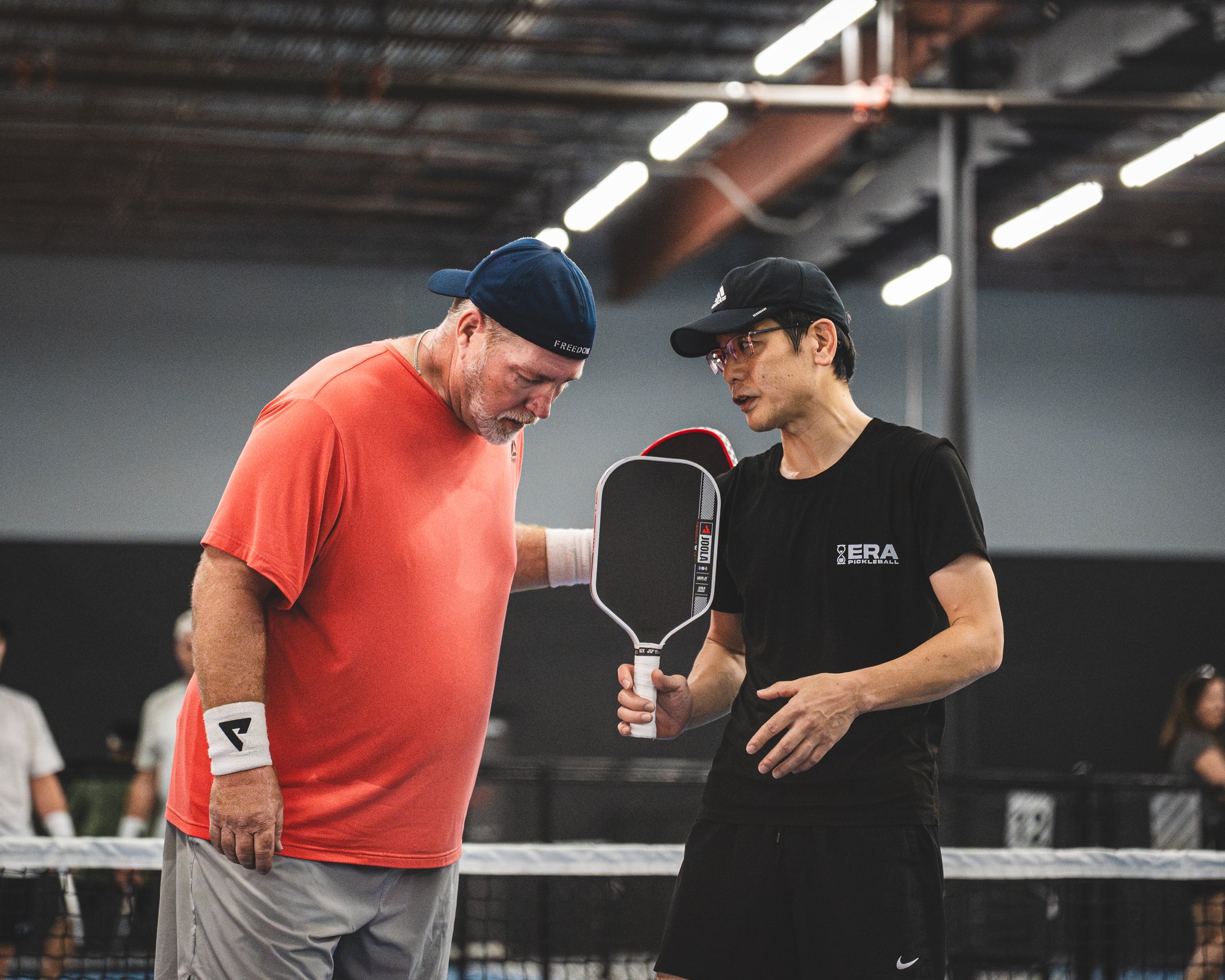
Your coaching team brings practical experience from years on the court. We’ve worked with players across levels—from enthusiastic beginners to competitive club players who chase national-level play. The feedback you receive is specific, actionable, and grounded in what happens during a real match. You’ll hear talk of ball trajectories, split-second timing, and the tension between staying low and rising through the shot to maintain depth. You’ll also hear about what to do when the ball sits up on a poor return or when your partner is off balance and unable to cover a widening crosscourt attack. The language we use is procedural and experiential, and it sticks because it mirrors what you face in the moment pickleball courts near me on the court.
Here is how Era Pickleball classes translate into improved match play on the court:
First, you learn to triangulate your court position so your doubles partner is never left to chase a ball that you could have reached. The philosophy is simple: two players, one efficient movement plan. We practice split-step timing, quick pivots, and the way your stance changes as you retreat to defend versus advance to attack. You’ll find yourself arriving at the net with more intention, not by chance, and your partner will feel that you are reading the point with better anticipation. The net game becomes not a series of opportunistic shots, but a coordinated melody where you and your partner move in concert, closing down options for your opponent and opening lanes for your own.
Second, you get better at reading the ball sooner. Early reads matter because they determine your options two or three shots ahead. The improved early read comes from watching the shoulders, wrist position, and the moment a ball leaves the paddle. Your brain learns to identify the telltale signs that a ball will land deep, short, or on the baseline, and you adjust your footwork and paddle angle accordingly. This translates into fewer wasted rallies and fewer unforced errors. It also means you recover from a mishit more quickly because you know the likely path of the ball and can pivot with less drama.
Third, your confidence in the dink becomes a strategic advantage rather than a safety valve. A good dink is not just a soft shot that barely clears the net; it is the setup for further control of the rally. In Era Pickleball classes, you’ll practice transitions from dink to drive to drop and back again in tight, decision-rich drills. You learn to impose tempo, dictate pace, and induce errors without ever forcing an unnecessary risk. The dink-to-drive ladder is built to build mental and physical muscle in unison, so you can switch gears mid-rally without losing your balance or your intention.
Fourth, your serve and return game become weapons rather than ceremonial starts. The serve sets the tone for the rally, and a return that sits up invites a chain of aggressive responses from your opponent. Our coaching focuses on precision, placement, and disguise. You’ll experiment with serve depth, angle, and spin while learning to stay compact and prepared for the immediate next shot. On the return, you learn to break the opponent’s rhythm with a controlled reply that minimizes your own risk while maximizing the chance of a favorable volley landing in your wheelhouse. The result is a higher win rate on actual service points as well as better opportunities to charge the net after the return.
Fifth, you gain a language for feedback that makes practice meaningful. The best improvement happens when you can translate a drill into a repeatable in-game habit. We emphasize feedback loops that stay with you long after a session ends. You learn to self-correct with a mental cue, you internalize a couple of repeatable footwork patterns, and you walk away with a plan that you can test in your next practice match. The most consistent players in Era Pickleball classes are those who treat every practice as if it were a match, and every match as a continuation of that practice.
Two compact, practical lists can help summarize the core experience without breaking the essay’s flow. They capture the essence of why this approach works and what an athlete can expect as they progress.
-
Core focus areas you’ll encounter in Era Pickleball classes
-
Footwork discipline that keeps you balanced and ready for the next shot
-
Paddle control for consistent depth and angle
-
Court vision that accelerates reads and decision making
-
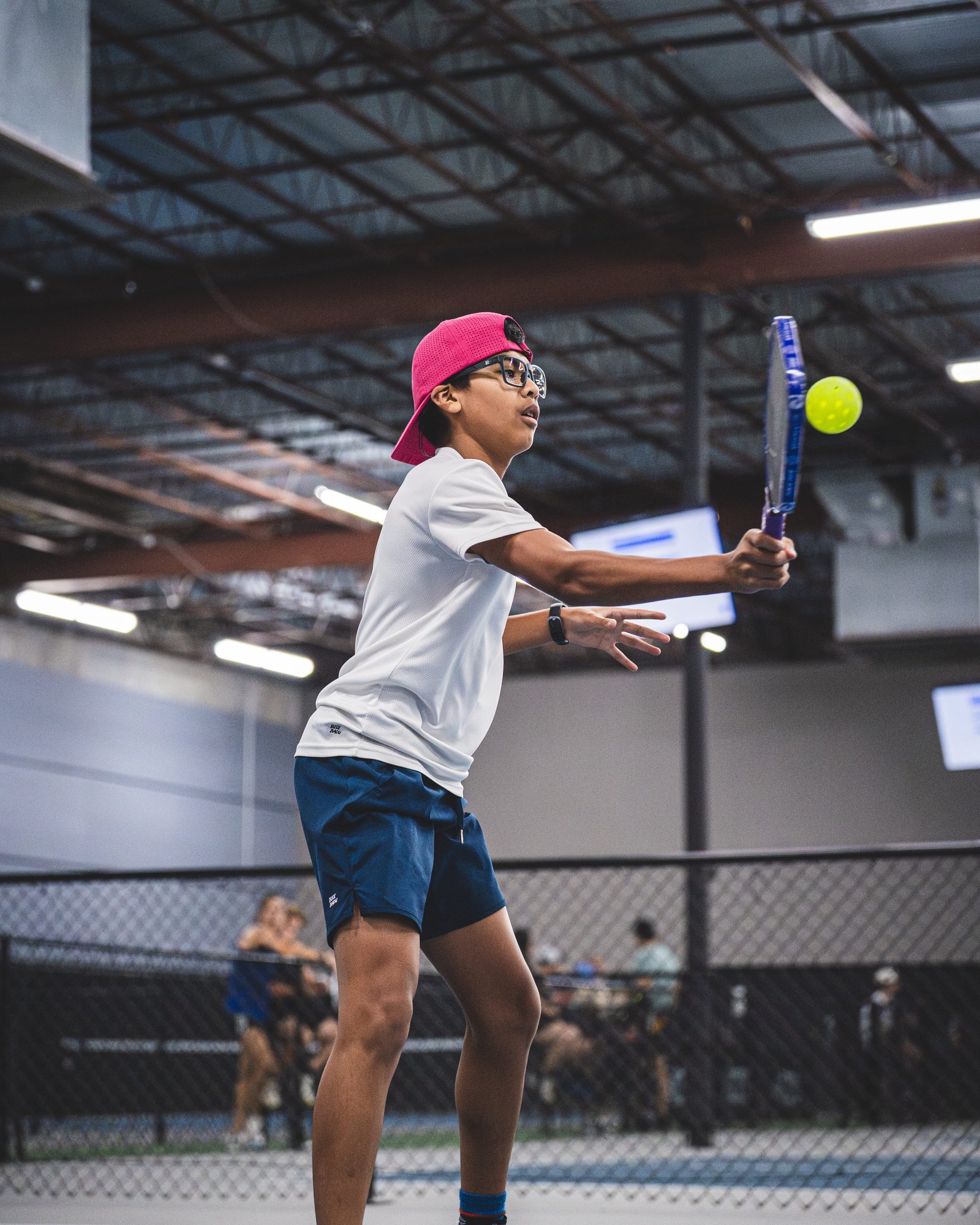
Dinking strategy that creates pressure without over-committing
-
Transition patterns that turn defense into offense efficiently
-
Milestones you might observe on your journey
-
Clearer understanding of when to drive, when to reset, and when to defend
-
More consistent first serves, with better directional control
-
Fewer unforced errors in the midcourt exchanges
-
Improved partner coordination and nonverbal communication on court
-
A growing sense of confidence in high-pressure rally situations
These elements do not exist in isolation. They work together in a tuning process that rewards time on the court and thoughtful reflection after games. The rhythm is not frantic. It is patient, focused training that compounds into a larger change in competitive behavior.
A day in the life of Era Pickleball training looks different for everyone, yet certain patterns emerge. For a beginner, the first weeks are about building a mental map of the court and learning the feel of the paddle in the hand. The focus is on posture, grip, and comfortable movement. You learn to coordinate breath with stroke execution so that your body does not tighten under pressure. The pace is deliberately slower at the outset to ensure the basics sink in before you begin to layer in more complex decisions. You’ll practice short rallies that emphasize the dink and net play, gradually adding drives and quick transitions once your confidence in the basics is steady.
For the more experienced player, the sessions intensify in complexity. We simulate doubles scenarios where you must communicate quickly and interpret your partner’s cues with minimal dialogue. You’ll drill patterns that force you to choose between aggression and caution, depending on the body language of your opponents and the time remaining on the shot clock inside your mind. The coaching staff uses video analysis in some sessions to help you see the gaps you don’t feel when you’re in the moment. Seeing your own tendencies laid out in slow motion bridges the gap between intention and outcome. It’s one thing to know you “need to be more aggressive on midcourt drives.” It’s another to observe exactly how your footwork and paddle alignment must shift to make that intention real during a rally.
The success stories come in many shapes. Some players report that their matches feel more controllable and less chaotic. Others realize they can stay on the offensive longer, wearing down opponents who previously bullied them with pace. For others, the breakthrough is not a dazzling shot but a reliable sequence that happens naturally during a point, enabling them to convert pressure into points with more consistency. The common thread is a deeper sense of agency on the court. When a player can decide the next two or three actions with confidence, a late rally does not become a lost cause but a sequence they can steer toward a favorable ending.
One of the practical advantages of the Era Pickleball model is the emphasis on adaptable principles rather than rigid, one-size-fits-all prescriptions. We teach the same core ideas but tailor the emphasis to the player’s physical attributes, prior experience, and preferred style. A taller player might derive a different benefit from the same exercise than a shorter, quicker player. A left-handed player finds certain angles more intuitive, and the drill language adjusts to reflect those realities. The result is a flexible coaching system that preserves consistency while honoring individuality. It is this balance that helps players feel held by the program rather than squeezed into a prepackaged formula.
The social dimension of pickleball training at Era Pickleball should not be overlooked. The sport invites a social, community-rich environment. You learn not only from the coaches but from fellow players who bring their own approaches to the game. Some evenings emphasize competitive doubles with short, intense games that mimic tournament conditions. Other sessions lean toward skill development, where you can quietly test a new tactic in a low-stakes setting before trying it in a real match. In practice, this blends the bite of sport with the warmth of a supportive community—a combination that makes it easier to commit to consistent practice.
We also design programming with longevity in mind. Players come with different levels of wear and tear, and we avoid pushing beyond what your body can safely handle. The pacing of progression is patient, with clear warning signs if a drill becomes too taxing or a routine begins to produce diminishing returns. The aim is to foster an enduring relationship with the sport, not to harvest quick wins at the expense of long-term enjoyment or safety. If you are dealing with a lingering shoulder issue or a knee niggle, we adjust the workload and modify drills so you can keep playing without compromising your health. The emphasis remains on technique, decision making, and match sense, but the path to those gains respects the body as well as the mind.
The case for investing in pickleball training through Era Pickleball is not simply about better shots on the scoreboard. It is about a shift in how you think about practice, how you translate intent into action during a rally, and how you interpret feedback when something does not go as planned. You start to notice that the points you win are almost always built from reliable patterns rather than extraordinary bursts of speed or luck. The system rewards the careful reader of the game who is willing to correct small habits before they become stubborn limitations. The changes accumulate, often in the form of smaller, more efficient movements, a calmer presence under rally stress, and a more precise ability to place the ball where you want it.
If you’re curious about the practical steps to begin, here is a narrative of onboarding that many players experience. You join a cohort, and your initial focus is on comfort and awareness—becoming fluent in the language of the court again after some time away. The coaching team assesses your baseline through a mix of on-court observation and a few controlled drills that isolate balance, paddle control, and shot selection. You receive a personalized plan that highlights two or three target areas for improvement, with a clear, achievable timeline. In the weeks that follow, you will notice incremental gains: a smoother serve, a steadier dink, a better sense of where to stand at the ability to control the tempo of points. The endgame is not a single moment of triumph but a cascade of points where your decisions align with your physical capabilities and psychological readiness.
In the end, the promise of Era Pickleball is an actionable pathway from novice curiosity to competent match play. It is not a miracle solution but a robust approach that respects the realities of the sport, including the need for pragmatic progress, careful risk management, and a developing court sense. The coaching team remains engaged, monitoring performance across sessions, and adjusting to the season’s demands or your evolving goals. We aim to create players who are not simply good in practice but who bring clarity, patience, and decisiveness to the court when the score is tight and the crowd is watching.
If you want to experience these benefits for yourself, you can explore Era Pickleball pickleball classes at erapickleball.com or the broader umbrella of pickleball training Era Pickleball. The value of the program is not measured solely by the number of perfect shots but by the steady, tangible increases in your ability to read a point, position yourself correctly, and stay emotionally even as the pace escalates. The journey is ongoing, and there is always something more to learn, another cue to refine, and a fresh way to approach a familiar rally.
The best advice I can offer to someone considering our pickleball coaching is to enter with curiosity, to approach each session as a chance to practice the exact behaviors that will show up when the scoreboard matters, and to commit to the quiet work of listening to feedback and trying new patterns. The game rewards players who can combine intention with habit, who can hold knowledge lightly while testing it in the pressure of a live rally, and who can sustain focus when fatigue begins to bite. In our experience, that combination is rare and incredibly powerful. It creates a player who not only improves but also understands why the improvements happened and how to keep them moving forward.
If you’re reading this and thinking about your own level, ask yourself what you want from the next season on the court. Do you want to reduce unforced errors while keeping your offensive options alive? Do you want to feel more confident when the rally starts to tilt in your opponent’s favor? Are you seeking a consistent, repeatable plan you can rely on when the score is tight and your opponents push back with pace? If the answer is yes to any of these questions, Era Pickleball classes could be the bridge you need. Our pickleball training is crafted to turn intention into action on the court, and the coaching is anchored in a deep understanding of the sport’s realities. You don’t have to be the strongest athlete to benefit; you have to be a player who wants to learn, adapt, and endure—on the court, in practice, and in the constant, incremental process of improvement.
As you consider the path forward, keep in mind the broader landscape of pickleball as a sport that rewards both skill and strategy. The game continues to evolve, bringing new players into the fold and pushing veterans to retool their approach. What remains timeless is the value of clarity, technique, and a relentless focus on how you can become a reliable force in your own right. Our classes at Era Pickleball are designed to nurture that steady arc—from the first dink to the pivotal late rally. The outcome is not just winning more points, but feeling more at home on the court and more confident in your own ability to shape the points you want to win.
If you would like to schedule a session or learn more about our approach, the doorway is open at erapickleball.com. You will find flexible options designed to fit different schedules and goals, with coaches who understand that improvement happens in small, consistent steps even as you aim for more ambitious targets. The invitation is practical and straightforward: come to the court ready to learn, to respond to feedback, and to put in the work that turns practice into consistent match performance. The results, over time, speak for themselves—and they speak with the calm, precise voice of a player who has learned to make the right choice at the moment it matters most.